

Smart Home Device Reliability Challenges and How Precision Milling Makes the Difference
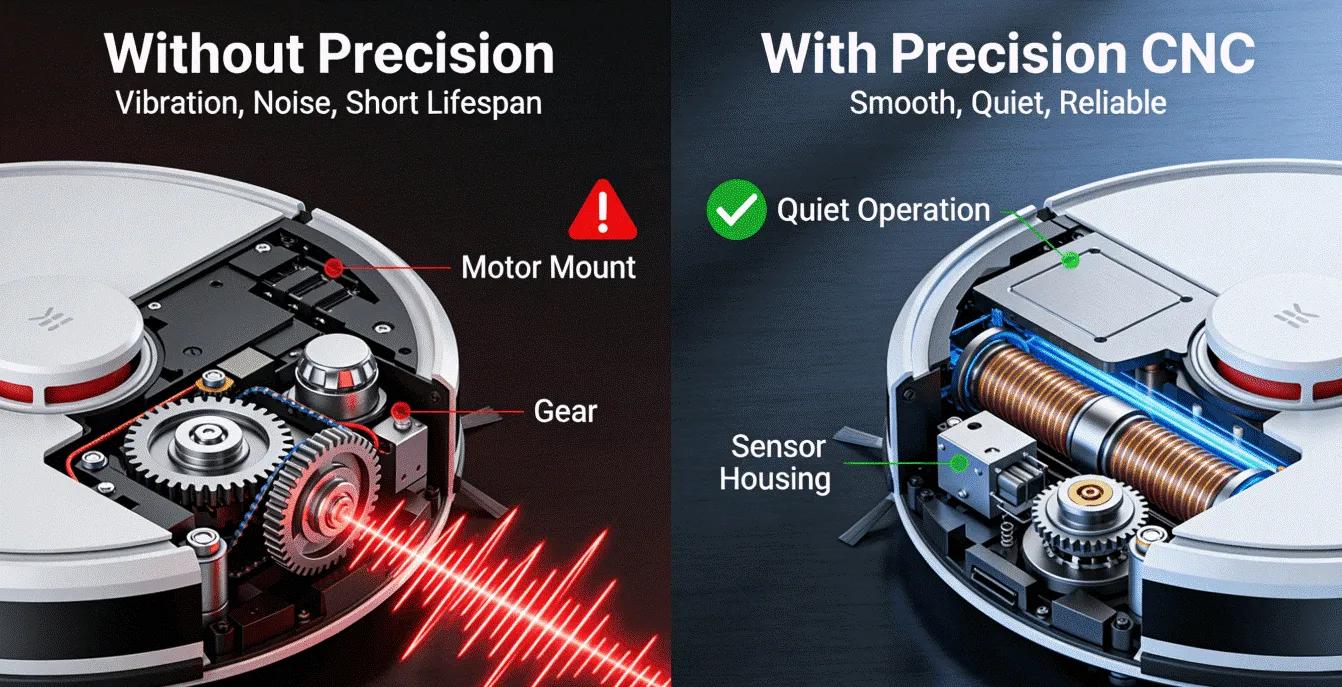
Figure 1: The direct impact of component precision on smart home device performance and user experience.
Introduction
In a period when smart home appliances are proliferating, users are often confronted with problems like unstable functionality, strange sounds, and a short lifespan. These problems are not only a source of a poor user experience but also negatively impact brand reputation.The problem often lies in a lack of precision in core components.
The traditional method has difficulty dealing with complex component geometries, as well as maintaining consistency.By embracing innovative precision manufacturing philosophies and effective Quality Control, manufacturers can improve component compatibility and longevity.The next sections will take a closer look into how precision manufacturing emerges as a catalyst for an upgrade to the smart home industry.
Why Does the Long-Term Reliability of Smart Home Devices Highly Depend on the Precision of Internal Components?
The smooth, noiseless, and long-lasting functionality of devices such as smart locks, robot vacuum cleaners, and thermostats is not just a matter of design and functionality – it is a result of the accuracy attained at the component level.
Figure 2: A robust quality control system is embedded throughout the entire CNC milling process to ensure part accuracy and consistency.
The Domino Effect of Imperfect Parts
The "skeleton and joints" of the device consist of critical parts such as the motor brackets, gears, and sensor housing. Without precise custom machined parts, a chain of errors is generated, affecting wear, noise, and eventual functional failure .
l Accelerated Wear and Functional Failure
Flaws like the absence of meshing among the gears and the position of the mounting holes inhibit the optimal synergy of the parts. This results in the generated vibration, increased noises, uneven stresses, wear, and eventual failures of the motor .
l Inconsistency and Brand Risk
Conventional manufacturing may produce minute discrepancies in batches. As a result, even the same model may vary in performance and lifetime, having a major bearing on customer satisfaction and industry trust. Guidelines issued by the International Electrotechnical Commission (IEC) focus on the fact that part accuracy is a basic requirement for high-reliability objectives .
Precision Manufacturing: A Holistic Quality Assurance System
Therefore, improving reliability requires an overall Quality Control strategy as part of an integrated design, manufacture, and inspection process. Precision manufacture is the operation of an overall strategy for quality control; all parts' specifications for size, geometric tolerance, and finish must be strictly adhered to . For a better understanding of the role of professional precision CNC milling services in improving reliability, a detailed technical guide can be consulted.
What is the Fundamental Difference Between Precision CNC Milling and Conventional Machining in Handling Complex Geometries?
With the miniaturization of smart home components and intricacies in designs and aesthetics, conventional manufacturing processes are no longer sufficient. There is a paradigm shift with the invention of the high precision CNC milling .
The variation here lies in Technology Innovation. The technology used in CNC allows the translation of design blueprints into digital instructions. This not only allows unlimited product designs but is a major enabler in the integration of high-density functions in devices.
Feature | Traditional Machining | Precision CNC Milling |
Control Method | Relies on mechanical transmission and manual operation. | Fully digital control through G-code programming . |
Precision Control | Typically at the 0.02mm level. | Achieves micron-level (μm) precision using closed-loop feedback systems like grating scales . |
Flexible Production | Requires re-adjusting fixtures and tools for product changeover. | Can complete product changeovers within minutes via program switching . |
Complex Geometries | Struggles with complex surfaces, often requiring multiple processes. | Capable of completing complex curved surfaces in a single operation (e.g., automotive turbocharger housing) . |
Typical Processes | Manual milling, drilling, tapping. | Automated CNC milling processes such as milling, drilling, and tapping, ensured by digital programming . |
How to Implement Sustainability into Precision Manufacturing Processes to Enable Green Products?
Currently, any product’s ecological impact is a concern for consumers as well as businesses. Green principles can now be integrated into Smart Home products by using Sustainable Manufacturing practices in precision manufacturing. This begins with the production process itself. In modern CNC milling applications, intelligent nesting and optimized tool paths enable the maximum usage of raw material sheets, significantly reducing waste.
Furthermore, the use of high-efficiency cooling systems and energy recovery units can substantially lower energy consumption. The use of recyclable materials like aluminum alloys further reduces the environmental burden.More deeply, precision components empower end products with sustainability. A high-precision, perfectly matched transmission system experiences less friction, resulting in lower energy consumption and quieter operation.
Robust and durable structural parts resist daily wear, significantly extending the product's overall lifespan. This aligns with the core principle of a circular economy: designing durable, repairable products to combat the traditional "take-make-dispose" model. As highlighted in a report by the Ellen MacArthur Foundation, extending product lifecycles is a key strategy for building a circular economic system.
What Core Capabilities Must be Prioritized When Choosing a Precision Machining Service Supplier?
Outsourcing critical parts needs to be done with an appropriate precision CNC machining services provider. This decision is about selecting an extended manufacturing team that understands your needs and safeguards your product quality.
Technical Equipment and Process Expertise
Powerful equipment is the foundation. Partners should possess multi-axis (especially 5-axis) high precision CNC milling and turning centers to handle complex geometries. Additionally, extensive experience with relevant materials (e.g., aluminum alloys) is crucial for the final part's performance .
End-to-End Quality Assurance System
Quality Control is the lifeline of precision manufacturing, far more than just final inspection. A qualified partner must demonstrate a full-process quality control system.
l System Certification and Design Collaboration
First, review their quality system certifications, such as ISO 9001. Simultaneously, assess their engineering team's ability to provide Design for Manufacturability (DFM) feedback, optimizing part designs initially to improve quality and reduce costs.
l In-Process Control and Final Validation
True quality control is embedded in every CNC milling processes. This includes rigorous First Article Inspection (FAI), periodic in-process inspections, and comprehensive final inspection using high-precision Coordinate Measuring Machines (CMM).
l Value of Industry-Specific Certifications
For industries with special requirements, specific certifications are more persuasive. For example, a supplier holding certifications such as IATF 16949 is particularly suited for industries with stringent safety and reliability demands,which provides a systematic framework for preventing the kind of latent defects that lead to field failures in consumer devices.
Responsiveness and Supply Chain Transparency
Evaluate their communication efficiency, quotation speed, prototype delivery time, and flexibility in handling design changes. Transparent project management and clear communication channels ensure smooth project progression.
Through What Successful Case Study May the Disruptive Positive Impact of Precision Parts on Finished Products be Shown?
A compelling case study vividly demonstrates how high-precision custom machined parts can revolutionize an end product's performance. Consider a home appliance manufacturer facing persistent complaints about a loud, low-frequency hum from their flagship robotic vacuum on hard floors. Investigation traced the problem to the main chassis frame — a structural part with thin walls and precision mounting holes. The parts from the original vendor had minor but critical deviations in flatness and hole positions, causing misalignment between the motor and drive wheel assembly, leading to vibration and noise.
The manufacturer switched to a machining partner with Industrial Equipment-grade capabilities. The new supplier used a 5-axis CNC machine to mill the bracket from a single block of high-grade aluminum alloy, ensuring high rigidity and dimensional accuracy. The coaxiality of all bearing housing holes and the flatness of the motor mounting surface were maintained within micron-level tolerances.
The results were immediate: after installing the new precision bracket, the robot's operating noise decreased significantly. More profoundly, perfect alignment optimized force distribution, reducing wear on the core transmission system and increasing the device's predicted lifespan. This case shows that internal custom machined parts are fundamental Industrial Equipment that define the market competitiveness of the end product. To understand the specific CNC milling services capabilities that enable such improvements, the relevant service page can be visited.
Conclusion
In conclusion, precision manufacturing is no longer merely a back end production activity but a strategic element directly linked to product innovation, market reputation, and corporate sustainable development. By combining stringent precision control, environmental philosophies, and advanced manufacturing technologies, companies can build a solid competitive barrier.
Manufacturing enterprises and R&D teams seeking to enhance product competitiveness from the source are advised to immediately engage with precision manufacturing partners possessing comprehensive certifications (e.g., ISO 14001, ISO 9001) and professional technical capabilities for an in-depth design feasibility assessment.
Author Bio
The author is a senior manufacturing industry analyst working in JS Precision, focusing on trends in advanced manufacturing technologies, supply chain optimization, and industrial sustainability.
FAQs
Q1: What materials are typically suitable for precision CNC milling?
A1: Precision CNC milling technology is applicable to a wide range of materials, from various aluminum alloys and stainless steels to engineering plastics like PEEK. Material selection requires comprehensive consideration of product strength, weight, corrosion resistance, and cost requirements. Excellent service providers offer material selection advice.
Q2: Can precision CNC machining be used for small-batch prototype production?
A2: Absolutely. Modern CNC machining is particularly suitable for small-batch prototypes and pilot production. It can quickly provide parts with production-grade performance for functional testing and validation, laying a solid foundation for subsequent mass production.
Q3: How to ensure that outsourced parts conform to design specifications?
A3: The key is selecting a supplier with a sound quality system. They should provide full-process inspection reports, especially First Article Inspection (FAI) and final inspection reports, ensuring all dimensional tolerances and surface treatments meet drawing requirements.
Q4: Do sustainable manufacturing practices increase the final product's cost?
A4: In the short term, some eco-friendly materials or processes may carry a slight premium. However, in the long run, through optimizing designs to reduce material waste, improving energy efficiency, and producing more durable products, the total cost of ownership can be lowered, and brand value enhanced.
Q5: What is the typical process from design files to obtaining a quote?
A5: The process is highly standardized. It typically involves providing 3D CAD models (e.g., STEP files) and basic technical requirements. Professional service providers often use online systems to automatically analyze manufacturability and quickly provide transparent quotes, making the process efficient and convenient.